
You took a break. You sat down, opened your phone, and scrolled for twenty minutes. Then you went back to work feeling slightly worse than before.
That is not a willpower problem. Your break did not fail because you lacked discipline. It failed because the thing that was tired never got a chance to stop.
Here is what makes this worth ten minutes of your reading: the research on nature and stress is not about weekends in national parks. The doses that show measurable effects are small, urban, and short enough to fit inside a lunch break.
Why a walk outside does something a scroll does not
There are two mechanisms here, and separating them is what makes the advice usable.
The first is attention. The kind of focus you use all day is called directed attention: to concentrate on one thing, you actively suppress everything else. Slack, notifications, an open-plan office, a kid asking a question. All of it runs through the same suppression system, and that system fatigues. The term for this is directed attention fatigue.
Natural settings engage attention differently. Leaves moving, light shifting, a bird crossing your field of view. These hold your interest without requiring suppression. Environmental psychologists call it soft fascination, and it is the reason the effect does not require you to concentrate on anything. Your phone, meanwhile, demands the same suppression your job does. That is why the scroll does not count as rest.
The second is stress physiology. Cortisol, and the autonomic balance you can read in heart rate variability. Time in green space shifts that balance toward the parasympathetic side, the one associated with recovery rather than vigilance.
Neither mechanism asks anything of you. You just have to be outside.
The numbers, with their limits
Twenty minutes drops cortisol, and the setting matters. A 2024 crossover field experiment published in IJERPH had participants walk a green route and an urban route, each about 20 minutes, with continuous ECG and salivary cortisol before and after. Average cortisol reduction after the green route was 53 percent, versus 37 percent after the urban route. The study had 17 participants, which is small. But it was a crossover design, so each person served as their own control, which is worth more than raw sample size suggests.
Twenty to thirty minutes is the efficient window. MaryCarol Hunter's team ran an eight-week study in which people took a "nature pill" at least three times a week, at least ten minutes, wherever and whenever they liked, with saliva sampled every two weeks. The steepest cortisol reduction fell in the 20 to 30 minute range. Benefits continued past that, at a slower rate of return.
Two hours a week behaves like a threshold. The largest dataset on this is a survey of 19,806 adults in England, published in Scientific Reports in 2019. People reporting 120 or more minutes of nature contact in the past week had consistently better self-reported health and life satisfaction. Below 120 minutes, there was no significant difference from zero.
The genuinely useful finding buried in that paper: how you accumulate the time does not matter. One long visit and several short ones produced equivalent results.
Which means 20 minutes six days a week works. So does 10 minutes at lunch most days plus one longer walk on Saturday.
The honest caveat: that last study is cross-sectional, so it cannot establish cause, and nature contact explained only about 1 percent of the variance in outcomes. A real effect, and a small one. Nobody is claiming a walk replaces treatment.
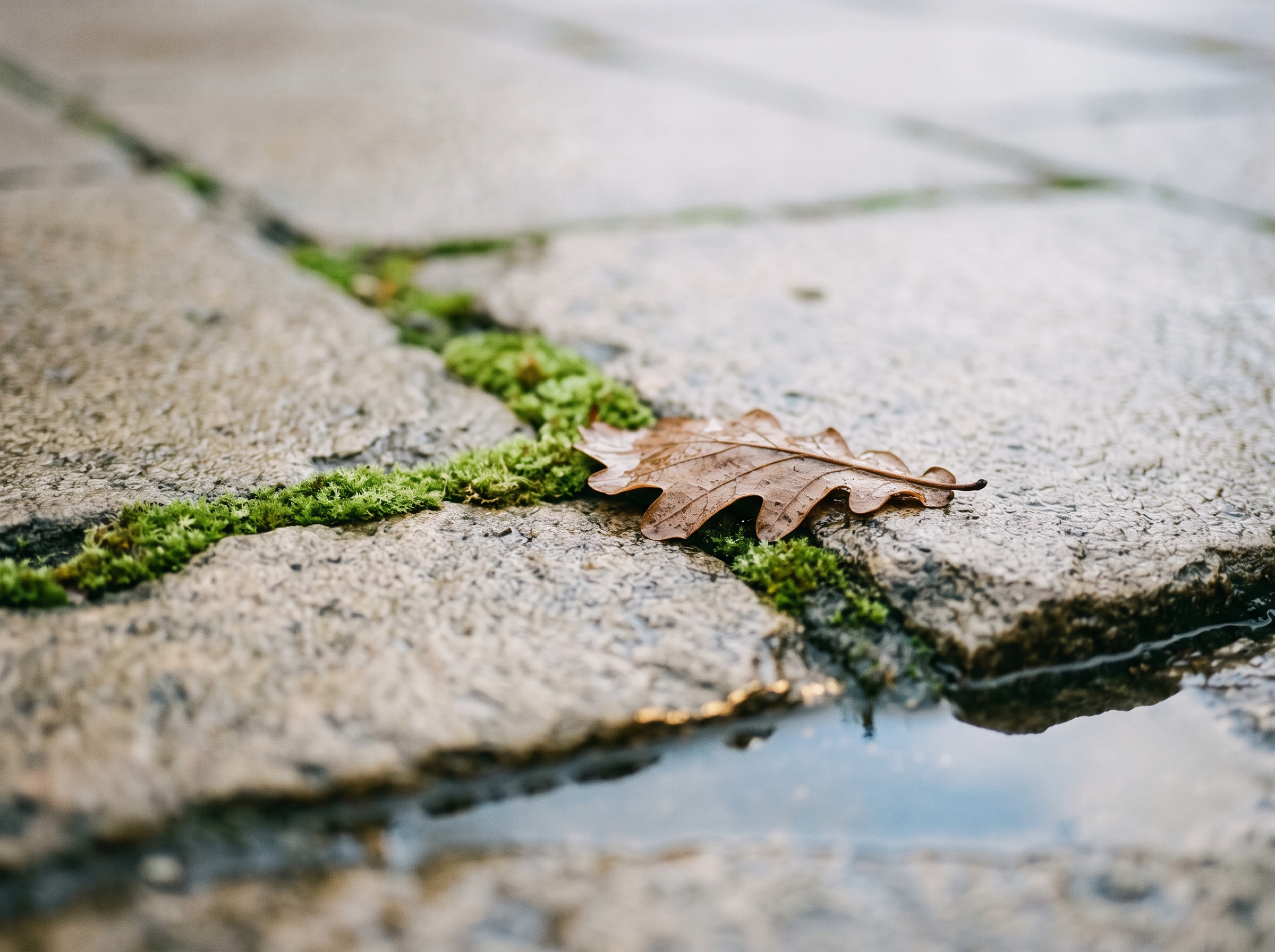
What about putting your hands in soil
This gets discussed alongside walking, usually with more certainty than the evidence supports, so it is worth being precise.
The strongest study here is Finnish, published in Science Advances in 2020. Researchers took 75 children aged three to five across ten daycare centers and, in four of them, covered the paved play yards with forest floor and sod for 28 days. Soil microbial diversity in those yards rose sharply, with Gammaproteobacteria more than eight times higher than in standard yards. The children playing there developed skin microbiota diversity approaching that of children who visited forests daily, and their blood immune markers shifted in an immunoregulatory direction.
That is a good study. Note what it actually involved: young children, playing in soil, daily, for four weeks.
It is also not the same claim as "grounding" or "earthing," which proposes that bare skin contact with the earth discharges electrical potential. The Finnish result is about microbes, not electrons, and the microbial explanation is both more mundane and considerably better supported.
The practical translation is small and harmless: touch the dirt in a planter, sit on the grass, repot something. Nobody has shown this does for adults what it did for those kids. It also costs nothing.
If the microbiome angle is what caught your attention, pomegranate and your arteries covers a stranger version of the same idea: gut bacteria converting something you ate into a compound your heart research is actually about.
Eight ways to get outside when you live in a city
Ranked. If you do one, do the first.
1. Phone in your pocket, headphones out
This is the highest-leverage item on the list and it takes no additional time. A walk with a podcast is not resting your attention, it is reassigning it. Soft fascination requires the environment to have access to you. Ten minutes of quiet walking can restore more than twenty minutes with something playing.
2. Map your greenest ten minutes once
Do this a single time and use it forever. Find the greenest loop you can walk in five minutes out and five minutes back from your door or your office. A corner of a park, a tree-lined block, the edge of a schoolyard, a cemetery. It does not need to be beautiful. It needs to be greener than the sidewalk you usually take.
3. Claim the after-lunch walk
The ten minutes after you eat are the easiest to defend, and they do double duty: blood sugar and attention. If the afternoon crash is your specific problem, this is where to start. What you ate at lunch matters too, and ultra-processed food and hidden muscle fat covers a quieter cost of getting that part wrong.
4. Put ten minutes of it in the first hour after waking
Outdoor light within an hour of waking helps your circadian clock anchor the day, and outdoor light on an overcast morning still vastly outperforms indoor lighting. If your nights are the real problem, wired but tired explains the cortisol side of that.
5. Name one sense
If your head is still spinning at minute four, give it a small anchor: find three sounds, three smells, or three different shades of green before you get back. This is not meditation. It is a switch that turns attention outward.
6. One longer walk a week
Short breaks accumulate, but a 45 to 60 minute walk has a different quality, and it is the least effortful way to reach that 120-minute threshold. Water or a large park if you have access to either.
7. Treat walking alone as its own thing
A solo walk is not a lesser version of a walk with a friend. With no one to talk to, attention actually goes outward and your mind is allowed to wander, which is most of the point. Practical safety makes it easier to do regularly: daylight, familiar routes with other people on them, a charged phone, telling someone where you went, and at most one earbud so you can still hear what is around you.
8. Keep one thing alive that needs dirt
A planter on a balcony, an herb pot on a windowsill. Once a week you put your hands in soil for a reason that is not self-improvement. Fall is the right time to plant bulbs.

A one-week plan
| Day | Break | Time |
|---|---|---|
| Monday | Map your greenest ten minutes, walk it once | 10 min |
| Tuesday | Same route after lunch, phone in pocket | 10 min |
| Wednesday | Walk in the first hour after waking | 10 min |
| Thursday | After-lunch route, notice three sounds | 10 min |
| Friday | Ten minutes with the planter, then a short walk | 15 min |
| Saturday | The long one, park or waterfront | 45 to 60 min |
| Sunday | Ask yourself: which ten minutes fit most easily? | Keep that one |
Weekly total: about 120 minutes. Which is the threshold, arrived at the easy way.
When this is not the answer
Short nature breaks have a real and modest effect. They are support, not treatment. See a doctor rather than adding another walk if you have:
- Low mood, loss of interest, or difficulty getting out of bed lasting more than two weeks
- Fatigue that does not lift with rest and is interfering with your daily functioning
- Chest pain, shortness of breath or unusual palpitations while walking
- Cramping leg pain that starts when you walk and stops when you rest
- Sleep problems that have persisted for months For persistent fatigue, a basic blood panel (CBC, ferritin, thyroid function, B12, vitamin D) is often clarifying and is a reasonable thing to ask for. For mood symptoms that are not shifting, a mental health professional is the right next step, not a longer walk. And if your sleep is the thing being broken, sometimes the cause is in the bed next to you: your partner's bad night looks at that.
Frequently asked questions
How much time in nature do I actually need? A survey of 19,806 adults in England found 120 minutes a week behaved like a threshold, with no significant benefit below it. How you split that time did not matter: one long visit and several short ones produced the same result.
Does a city park count as nature? Yes, in the research that has been done. A 2024 crossover study found a 53 percent average cortisol reduction after a 20-minute walk on a green route inside a city, compared with 37 percent on an urban route. Trees, grass and open sky appear to be enough.
Does listening to a podcast cancel the benefit? No study measures this directly. But the mechanism depends on your attention being held gently by your surroundings rather than by a task. Audio keeps attention assigned, so at minimum it is worth walking some of your breaks in silence.
Does walking barefoot on grass boost your immune system? The best evidence here is a 2020 study of 75 children whose daycare yards were covered with forest floor for 28 days, after which their skin microbiota diversified and immune markers shifted in a regulatory direction. That is about microbial exposure, not electrical "grounding," and it has not been tested the same way in adults.
What if the weather is bad? A short walk still works in the rain, and wet ground arguably makes the environment easier to notice. If you truly cannot go out, a break at a window with a tree in view is better than nothing, though it is not the same thing.
Is walking alone safe? Daylight, familiar routes with other people around, a charged phone, and telling someone where you are going all help. Keeping one ear free means you can still hear your surroundings.
You may not have a forest. You almost certainly have a corner with five trees in it, about five minutes from your door.
Everything here is general information and is not medical advice. If fatigue or low mood persists, talk to a professional.
Which ten minutes of your day could go outside this week?
Related reading
- Wired But Tired · the cortisol curve these breaks are working against
- Your Partner's Bad Night Could Be Changing What You Eat · when the sleep problem is not yours
- Pomegranate and Your Arteries · the other thing your gut microbiome is quietly doing