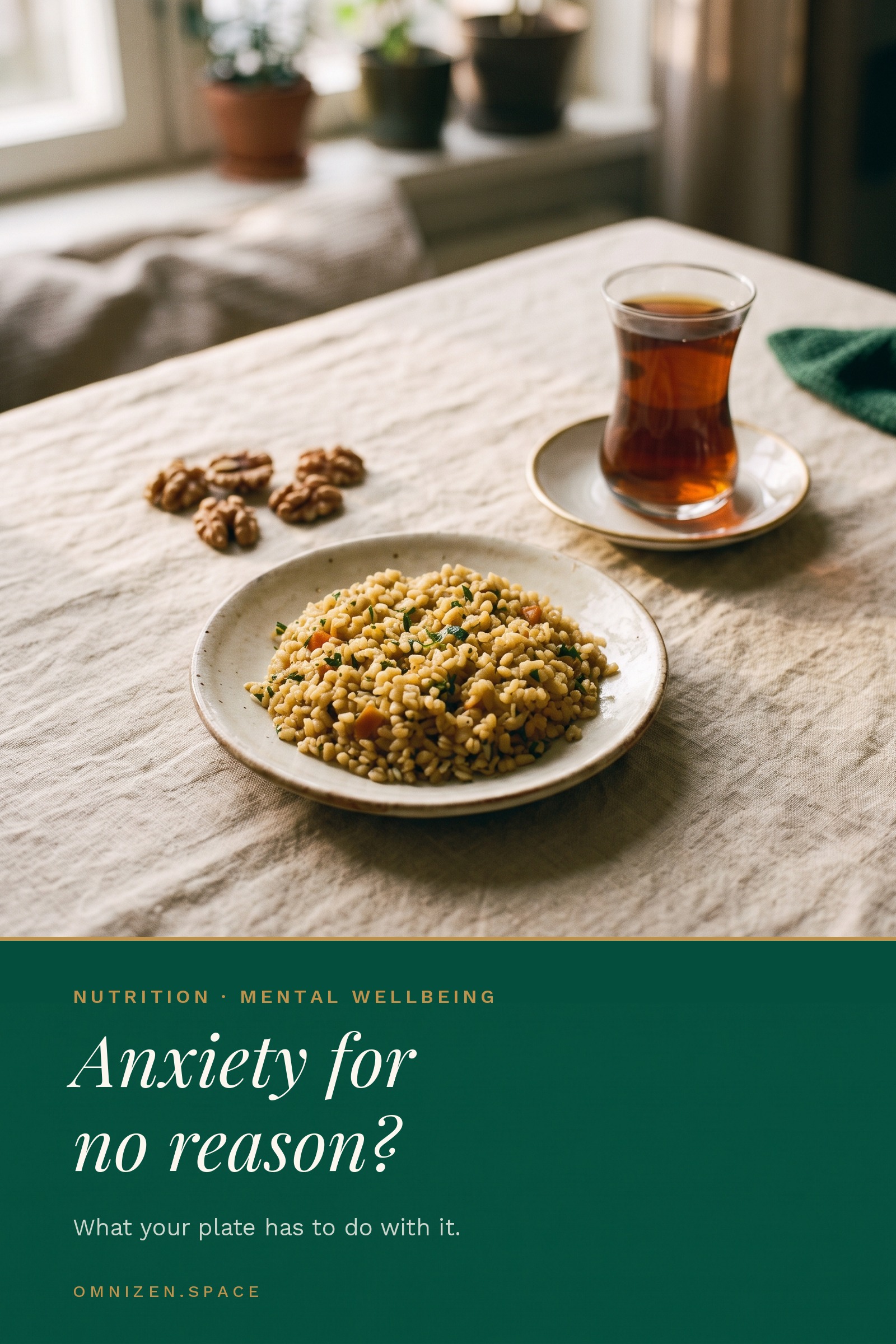
It is a Tuesday afternoon and nothing is wrong. No bad email, no argument, no deadline you forgot. And still there is a tightness under your ribs and a low hum of dread you cannot trace to anything.
So you do what most of us do. You start auditing your life. What am I missing? What is wrong with me?
Here is one more question worth adding to the list, not instead of the others but alongside them: what did I eat today?
This is not a claim that anxiety is "just" diet. Anxiety has many sources, and some have nothing to do with food. But your brain is an organ, it runs on fuel, and the quality and steadiness of that fuel shows up in how you feel.
First, a clear line
Nothing in this post replaces therapy, psychiatric care or medication. If you are in treatment or taking medication for anxiety or depression, do not stop or change it without talking to your doctor.
Think of food as the foundation under the house, not a replacement for the house. There is early evidence this framing holds up. In the 2017 SMILES trial, adults with moderate to severe depression who received 12 weeks of dietary support on top of their usual care improved significantly more than those who received social support alone. It was a small trial, and it was about depression rather than anxiety. But the direction matters.
Why this happens: your brain is the hungriest organ you have
Your brain is about 2% of your body weight and uses roughly 20% of your resting energy, according to a classic PNAS analysis of the brain's energy budget. Making and recycling chemical messengers like serotonin, dopamine and GABA, and keeping billions of neurons talking, is expensive work.
That energy is produced by mitochondria. You probably learned to call them "the powerhouse of the cell." Newer research paints them as something closer to a control board: they sense stress signals and help decide where a cell's resources go. A 2018 systematic review found that psychological stress measurably changes mitochondrial function. The full chain from mitochondria to mood is still being worked out, and anyone who tells you otherwise is getting ahead of the data.
What we can say plainly: when the brain's energy supply swings, one of the first regions to struggle is the prefrontal cortex, the part that helps you reason, plan and talk yourself down. When it is under strain, the amygdala, the brain's threat detector, gets more say. Your body can stay on alert even when there is nothing to be alert about.
So the question is not only how much fuel reaches your brain. It is how steadily it arrives. That points to three places on your plate.
Link 1: the blood sugar wave
White bread, white rice, pastries and sweetened drinks push blood glucose up fast. Your pancreas answers with a surge of insulin. When glucose then drops quickly, your body can respond with adrenaline and cortisol to pull stored sugar back into the blood.
Adrenaline does not know the difference between a glucose dip and a threat. Racing heart, sweaty palms, a jittery sense that something is off: those can be the same hormones behind a panic spiral.
A useful picture is a hybrid car. Refined carbs are flooring the gas pedal: a sudden burst, then the engine sputters. Fiber-rich, slowly digested carbs are drawing power from the battery: steady, quiet, long-lasting.
The honest caveat: in healthy people without diabetes, blood sugar rarely drops to truly low levels, and not every anxious moment has a glucose dip behind it. Still, large observational data from the Women's Health Initiative linked high glycemic index diets with a higher risk of depression. If you tend to wake at night with a pounding heart, our post on being wired but tired covers the evening side of this.
Link 2: the membranes around your neurons
Every neuron is wrapped in a membrane that needs to stay flexible so that signals can land on its receptors. Omega-3 fatty acids, especially EPA and DHA, are part of that structure and tend to calm inflammation rather than fuel it.
The typical US diet is heavy in omega-6 fats from seed oils and packaged foods and light on fatty fish, so the balance tilts easily.
What does the evidence say? It is mixed, and worth reading carefully:
| Finding | Source |
|---|---|
| EPA-dominant omega-3 formulas helped depressive symptoms, mostly as an add-on to treatment | Liao et al., 2019 |
| Omega-3 supplementation was associated with reduced anxiety symptoms, more clearly in clinical populations | Su et al., 2018 |
| In the general population, omega-3s did not prevent anxiety or depression | Deane et al., 2021 |
The fair summary: omega-3s are building material, not a sedative.
Link 3: your gut lining
Your gut is lined with cells covered by a thin layer of mucus, the first barrier between what you eat and your bloodstream.
Packaged cookies, snack bars and many sauces contain emulsifiers, additives that keep oil and water from separating. Think of what dish soap does to grease on a pan. Emulsifiers work on a similar principle.
In mice, common emulsifiers like carboxymethylcellulose and polysorbate 80 thinned the gut's mucus layer, let bacteria move closer to the gut wall and promoted low-grade inflammation. In 2022, a controlled human feeding study found that carboxymethylcellulose reduced microbial diversity and beneficial gut metabolites in healthy adults. The gut and brain talk constantly, much of it through the vagus nerve, though how much gut inflammation contributes to anxiety in any one person is still an open question.
Zooming out, a 2024 umbrella review in The BMJ linked higher ultra-processed food intake to a greater risk of anxiety and common mental disorders. That is observational data, so it shows association, not cause. We covered what those same foods do to muscle in our post on ultra-processed food and hidden muscle fat.
The reassuring part: your body is forgiving. A cookie at a birthday party is not the issue. The issue is the same packaged snack, every day, on autopilot.
What actually helps: three swaps, ranked
If you only do one, do the first. It touches the most meals.
1. Swap white rice for bulgur (or another intact whole grain)
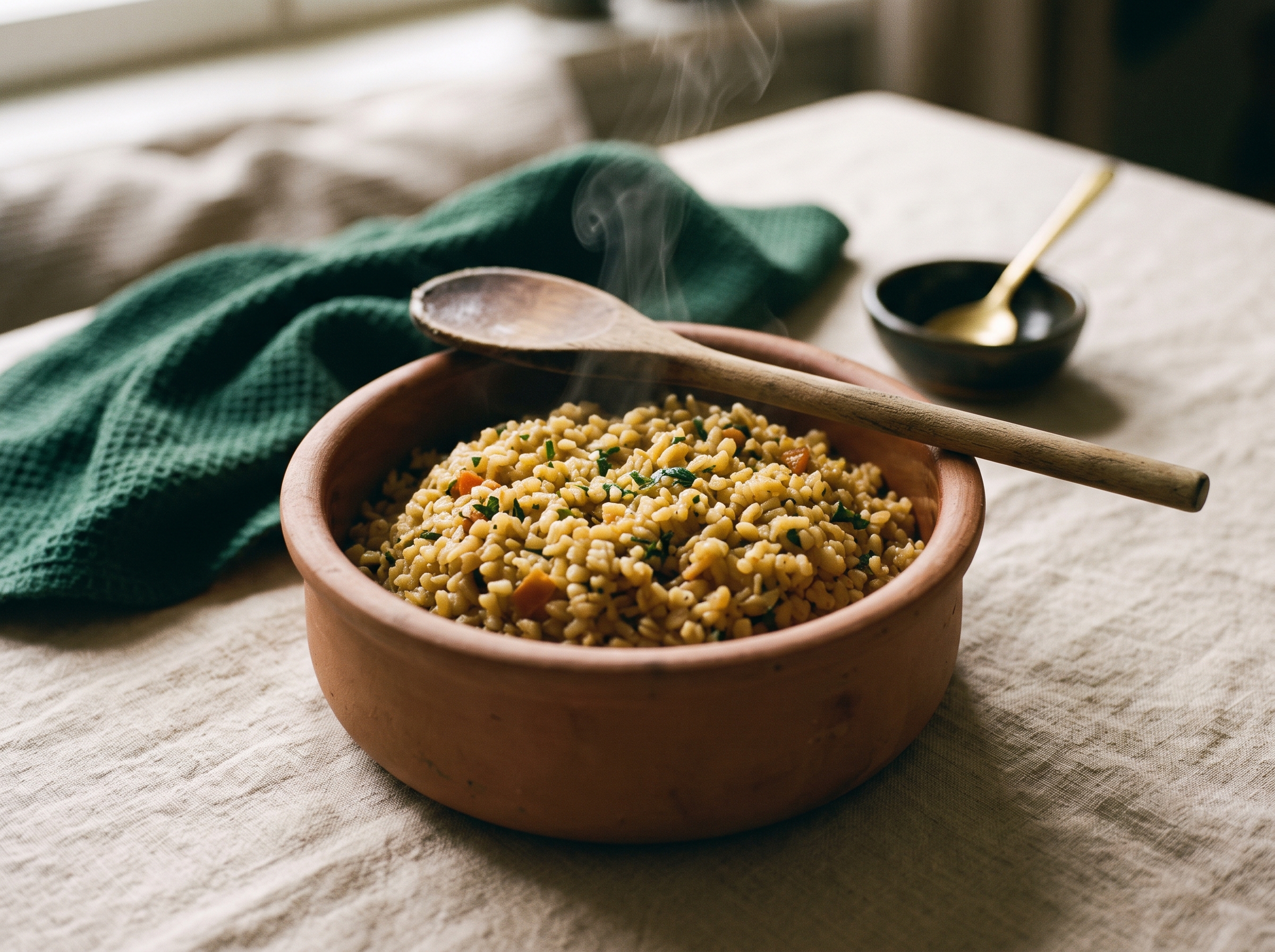
Bulgur is cracked, parboiled wheat, a staple in Turkish and Middle Eastern kitchens and easy to find in US grocery stores. Its glycemic index sits around the mid-40s, while white rice often lands above 70, based on the international GI tables. The fiber slows how quickly digestive enzymes reach the starch, so glucose enters your blood gradually instead of all at once. It cooks in about 12 minutes. Farro, barley and steel-cut oats work on the same principle.
2. Eat baked or grilled small oily fish twice a week
Sardines, anchovies, mackerel and salmon are the richest food sources of EPA and DHA. Bake or grill them rather than deep-frying, which adds a lot of cooking oil and degrades some of the delicate fats. Canned sardines on whole-grain toast takes under five minutes. If you do not eat fish, a handful of walnuts at breakfast is a good addition. Walnuts contain a plant omega-3 (ALA) that your body converts to EPA only in small amounts, so think of them as support, not a substitute. Walnuts also feed some interesting gut bacteria, which we explored in our pomegranate and arteries post.
If you are considering a supplement, talk to your doctor first. Omega-3s can interact with blood thinners.
3. Replace your afternoon packaged snack with raw nuts
Look at the snack you reach for around 3 or 4pm. If it comes in a wrapper with a long ingredient list, swap it for a small handful of raw almonds or unroasted hazelnuts. One ingredient. The fat and fiber keep you full longer and do not jolt your blood sugar. This takes no prep at all.

One quiet note. If the packaged snack is what gets you through a draining afternoon, that tells you something about the afternoon, not about your willpower. Food changes stick better when they come from care rather than guilt. And food is only one lever: movement, sleep and even a few minutes outside help calm the nervous system too. Our 10-minute nature break post has the easiest version.
A one-week micro plan
You do not need all three. Pick one and try it for a week.
| Day | Swap | Check-in |
|---|---|---|
| Monday | Buy one bag of bulgur and one bag of raw nuts | Notice when your afternoon snack craving hits |
| Tuesday | Bulgur instead of white rice at dinner | How do you feel two to three hours later? |
| Thursday | Baked sardines or salmon, or walnuts at breakfast | Any difference in your evening? |
| Every afternoon | Raw nuts instead of the packaged snack | Rate your 4pm mood from 1 to 5 |
| Sunday | Ask yourself: "Which swap felt easiest to keep?" | Keep that one next week |
When this is not the answer
Food is a foundation, not a treatment. Talk to your doctor or a licensed mental health professional if:
- Anxiety has lasted several weeks and is getting in the way of work, sleep or relationships
- You have sudden panic attacks with chest pain, shortness of breath or a racing heart
- You have started avoiding places or situations because of fear
- You are using alcohol or other substances to take the edge off
- You have diabetes and wake at night sweaty, shaky or with a pounding heart Palpitations and a tight chest can also have physical causes, including thyroid problems, heart rhythm issues and anemia. A primary care visit with a basic blood panel (thyroid function, blood count, fasting glucose or A1C) is a sensible first step to rule these out.
Frequently asked questions
Can your diet cause anxiety? Diet is not the sole cause of anxiety, but it can contribute. Sharp blood sugar swings, low omega-3 intake and a high share of ultra-processed food have all been associated with worse mood and anxiety in research, though much of that evidence is observational.
Why does low blood sugar feel like anxiety? When blood glucose drops quickly, the body can release adrenaline and cortisol to raise it. Those hormones cause a racing heart, sweating and restlessness, which feel almost identical to anxiety.
Do omega-3s help with anxiety? Meta-analyses suggest omega-3 supplements may modestly reduce anxiety and depressive symptoms, mainly in people with a diagnosed condition. In the general population they have not been shown to prevent anxiety. Talk to your doctor before starting a supplement.
Are emulsifiers bad for your gut? Animal studies and an early human feeding study suggest some emulsifiers, like carboxymethylcellulose, can disrupt the gut's mucus layer and microbiome. Occasional intake is unlikely to matter much; daily habits are what count.
Is bulgur better than rice for blood sugar? Bulgur has a lower glycemic index than white rice and more fiber, so it raises blood sugar more gradually. Brown rice falls in between. Any intact whole grain is a steadier choice than refined white rice.
The next time a cloud of worry settles over you with no obvious cause, ask what is going wrong in your life, by all means. Then ask one more thing: what did I feed the part of me that is doing all this worrying?
This article is for general information and is not medical or psychological advice. If anxiety is affecting your daily life, please talk to a professional.
Which of the three swaps feels most doable for you this week?